Physical AI When Artificial Intelligence Meets the Real World
Introduction
Artificial intelligence has mostly lived inside computers and phones, helping us write emails or answer questions. Physical AI is a new and exciting development where AI moves beyond screens and actually interacts with the real world through robots, vehicles, and machines.
What Is Physical AI?
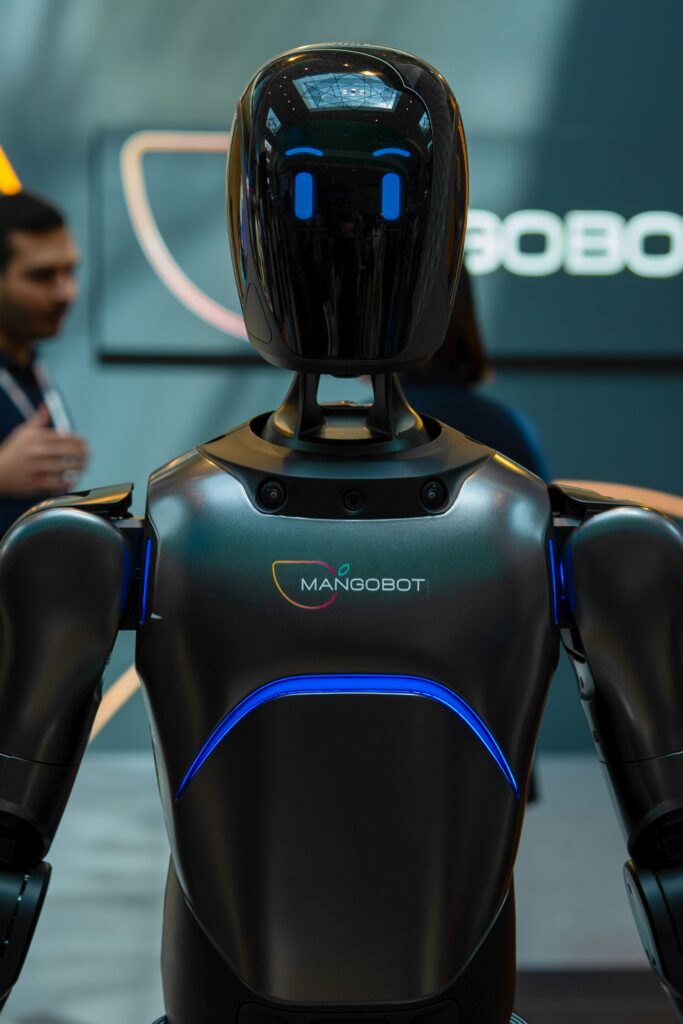
Physical AI refers to artificial intelligence systems that can perceive, understand, reason about, and act within the physical world in real time. Unlike traditional robots that simply follow pre-programmed instructions, Physical AI systems learn from their environment and adapt their behavior based on what they see and sense.
How It Works
These systems combine computer vision, natural language processing, and motor control into a single intelligent framework called a vision-language-action model. Specialized processors built into the robots allow them to make quick decisions on their own without needing to connect to the cloud for every action.
Real-World Applications
Physical AI is already being tested in warehouses, manufacturing plants, and logistics centers where robots autonomously sort, carry, and organize items. At CES 2026, NVIDIA announced that robotics is approaching its “ChatGPT moment,” releasing open frameworks and models specifically designed to make physical AI robots easier to build and deploy.
Why It Matters in 2026
Companies like NVIDIA, Arm, and Qualcomm are heavily investing in physical AI, signaling that this technology is moving from lab experiments to real-world deployment at scale. Deloitte predicts that over the next two years, physical AI will expand far beyond traditional industries into healthcare, consumer products, and public infrastructure.
What Comes Next
The next big milestone will be humanoid robots powered by agentic AI brains that can plan complex tasks, recover from mistakes, and operate in unpredictable environments. This convergence of physical AI and agentic AI is expected to redefine automation across nearly every industry over the coming decade.
Useful Links:
Article And Image References:
Deloitte. (2026, February 8). AI goes physical: Navigating the convergence of AI and robotics. Deloitte Insights. https://www.deloitte.com/us/en/insights/topics/technology-management/tech-trends/2026/physical-ai-humanoid-robots.html
Schmelzer, R. (2026, January 10). Physical AI made waves at CES 2026. What is it? Forbes. https://www.forbes.com/sites/ronschmelzer/2026/01/10/
physical-ai-made-waves-at-ces-2026-what-is-it/
https://unsplash.com/photos/a-modern-black-robot-with-blue-accents-and-orange-accents-36P9drFnbRs