What Are Docker Containers and How Do They Simplify Development?
During my data science coursework, I’ve encountered Docker repeatedly, but understanding what containers actually do required hands-on experience. Docker containers have transformed how developers build, test, and deploy applications by solving one of programming’s most frustrating problems—the “it works on my machine” syndrome.
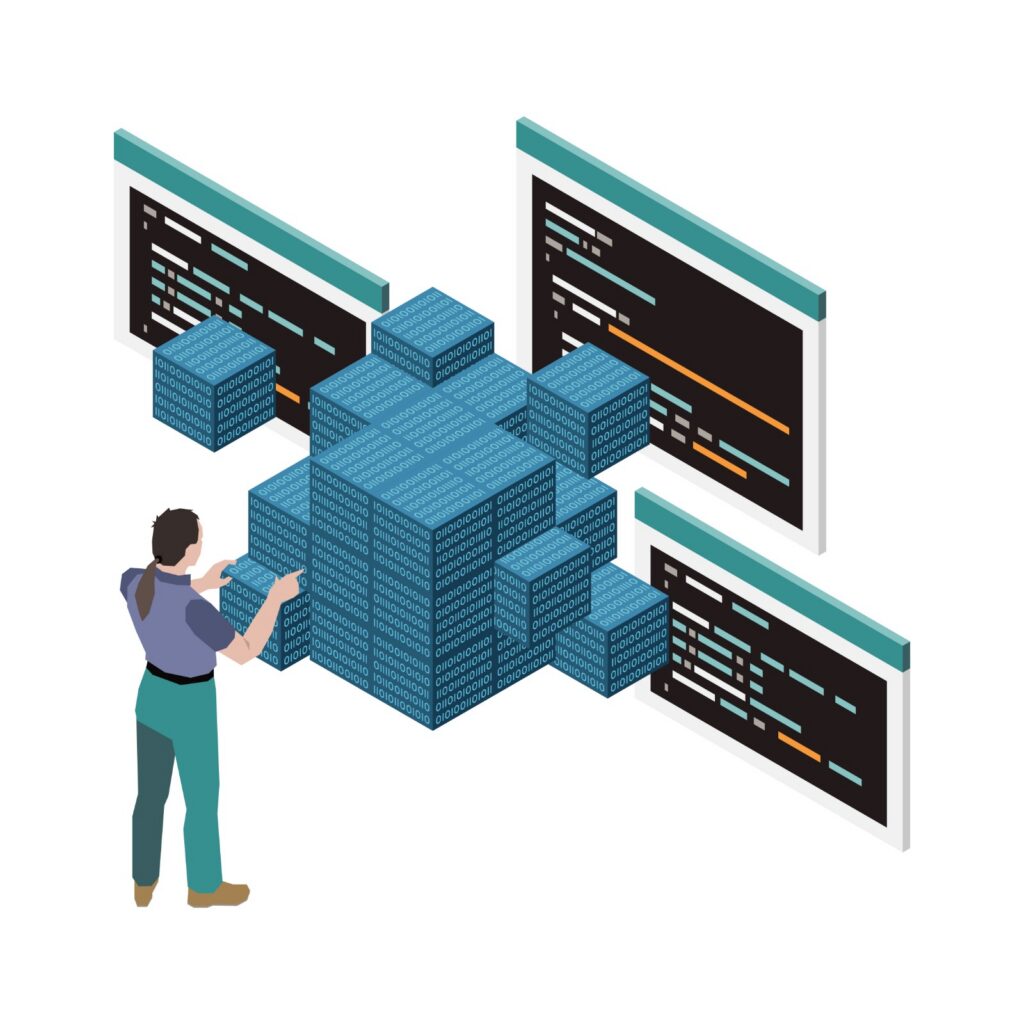
A Docker container is a lightweight, standalone package that includes everything needed to run a piece of software—the code, runtime environment, system tools, libraries, and settings. Unlike traditional virtual machines that require a full operating system for each instance, containers share the host system’s OS kernel, making them incredibly efficient and fast to start. This means I can package my Python application with all its dependencies into a container image, and that exact environment will run identically on my laptop, a colleague’s computer, or a production server. The cross-platform consistency eliminates deployment headaches and ensures standardization across development teams.
What impressed me most about Docker is the speed and efficiency it brings to the development workflow. Containers can be deployed in seconds rather than minutes, and the layered architecture supports version control and CI/CD pipelines seamlessly. Instead of manually installing operating systems and configuring environments repeatedly, Docker automates these processes with just a few lines of code. Resource optimization is another significant advantage—containers require fewer computational resources compared to full virtual machines, allowing more efficient use of server capacity. For data science projects specifically, Docker ensures that complex environments with multiple Python packages, specific library versions, and system dependencies can be reproduced exactly, making collaboration and deployment far more reliable. While there’s a learning curve to mastering Docker orchestration and security considerations, the benefits for standardization and deployment efficiency make it an essential tool in modern software development.
Reference:
DuploCloud. (2025, June 2). Docker Advantages and Disadvantages: What You Need to Know. DuploCloud Blog. https://duplocloud.com/blog/docker-advantages-and-disadvantages/
CloudBees. (2026, January 12). Docker Benefits for the Enterprise. CloudBees Blog. https://www.cloudbees.com/blog/docker-benefits-for-the-enterprise
freepik. (n.d.). Isometric hosting concept [Vector illustration]. Freepik. https://www.freepik.com/free-vector/isometric-hosting-concept_3279053.htm