AI Governance & Responsible AI — The Rules That Will Shape Every AI System in 2026
For years, AI development moved fast and asked questions later. Build it, ship it, fix it when something goes wrong. That approach worked — until AI started making decisions that affected millions of people’s lives.
In 2026, the rules of the game are fundamentally changing. AI Governance and Responsible AI are no longer optional ethics exercises — they are legally binding, globally enforced, and becoming the defining framework for how every AI system gets built, deployed, and monitored.
So, What Exactly Is AI Governance?
AI governance is the set of policies, regulations, frameworks, and oversight mechanisms that ensure AI systems are safe, transparent, fair, and accountable. It answers the questions that pure technology cannot: Who is responsible when AI makes a wrong decision? How do we ensure AI doesn’t discriminate? What data can AI be trained on?
Think of it this way: if AI is a car, AI governance is the entire system of traffic laws, safety standards, insurance requirements, and driving licenses that make sure that car doesn’t cause harm on the road. You can build the fastest car in the world, but without governance, it’s just a danger waiting to happen.
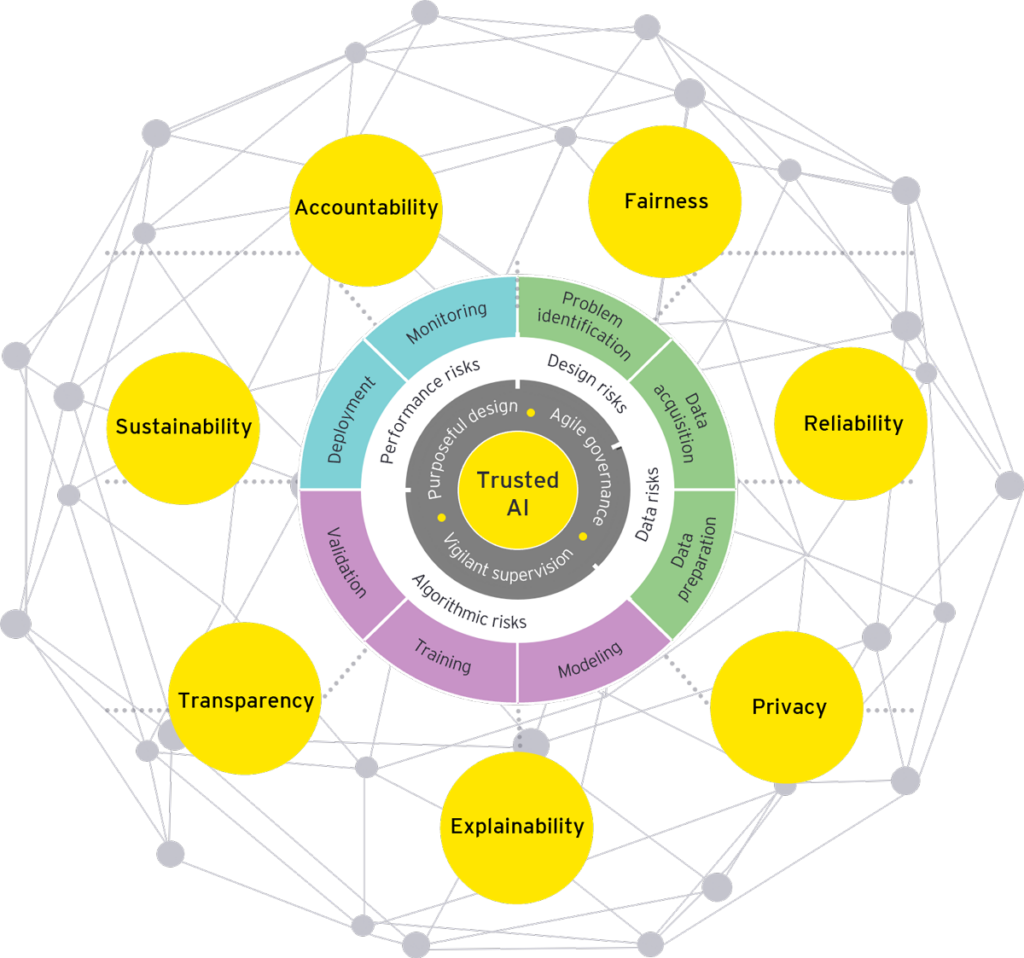
Why Is It Exploding Right Now?
2026 is a landmark year for AI regulation globally — and the pressure on organizations is intensifying fast:
- The EU AI Act’s first major enforcement cycle begins in 2026, covering high-risk AI systems used in hiring, healthcare, credit scoring, and law enforcement — with penalties reaching up to 7% of global annual turnover for violations
- High-risk AI systems must now undergo pre-deployment risk assessments, extensive documentation, post-market monitoring, and incident reporting before they can be deployed in EU markets
- The EU AI Act has already required AI literacy training for all employees working with AI since February 2025, making governance a workforce issue, not just a legal one
- ISO/IEC 42001 — the international AI management standard — is being rapidly adopted globally as organizations build formal AI governance frameworks
- Companies are creating dedicated “AI Governance Officer” roles, following the precedent of GDPR’s Data Protection Officers — a sign that governance is becoming a full-time, C-suite concern
Real-World Applications You’ll See Everywhere
AI governance isn’t just a legal checkbox — it’s reshaping how AI gets built across every industry:
- Healthcare: AI diagnostic tools must now maintain full audit trails, explainability reports, and human oversight protocols before deployment in clinical settings
- Hiring & HR: AI screening tools face strict bias audits and transparency requirements — candidates must be told when AI is involved in decisions affecting them
- Finance: Credit scoring and fraud detection AI must document decision logic and provide appeal mechanisms for affected customers
- Law Enforcement: Facial recognition and predictive policing AI face the strictest restrictions — several high-risk uses are outright banned under the EU AI Act
- Enterprise AI: Every organization deploying AI must maintain a model inventory — a register of all AI systems in use, their risk level, and their compliance status
What This Means for You
Whether you’re a developer, a business owner, or a student entering the AI field — AI governance is not someone else’s problem. It is the new foundation every AI system must be built on.
The developers and organizations that treat responsible AI as a competitive advantage — not a compliance burden — will be the ones that earn user trust, avoid massive penalties, and build AI that actually lasts. In 2026, the most important question isn’t just “Can we build this AI?” It’s “Should we — and if so, how do we make sure it’s safe, fair, and accountable?”
References:
OneTrust. (2026, February 17). Where AI regulation is heading in 2026: A global outlook. https://www.onetrust.com/blog/where-ai-regulation-is-heading-in-2026-a-global-outlook/
Orange Business. (2026, January 7). Data & AI trends for 2026: Governance, regulation, sovereignty. https://perspective.orange-business.com/en/data-ai-trends-for-2026-governance-regulation-sovereignty-and-the-shift-to-autonomous