Blog

  • Summary Post – HW 9

    HW9 – Summary Post


    Time Log – Teams’ Sites

    (Time spent visiting and commenting on other Teams’ sites)

    Date: Mar. 03, 2026 From: 06:15pm To: 06:27pm
    Date: Mar. 05, 2026 From: 10:05am To: 10:17am
    Date: Mar. 06, 2026 From: 07:10pm To: 07:21pm


    Time Log – Students’ Sites

    (Time spent visiting and commenting on other students’ sites)

    Date: Mar. 05, 2026 From: 10:15am To: 10:26am
    Date: Mar. 05, 2026 From: 07:30pm To: 07:41pm
    Date: Mar. 06, 2026 From: 10:30am To: 10:42am
    Date: Mar. 06, 2026 From: 06:10pm To: 06:21pm


    Essay I – Summary of Content Activities

    This week, I created two new in-depth blog posts exploring the latest and most impactful trends in artificial intelligence for 2026. The first post covers Vibe Coding, a revolutionary shift in software development where anyone regardless of coding experience, can build fully functional apps simply by describing what they want in plain English, powered by tools like Cursor, GitHub Copilot, and Replit AI. The second post explores Small Language Models (SLMs), explaining how compact AI models like Microsoft’s Phi-4 Mini and Meta’s LLaMA 3.2 are outperforming bloated large models by running directly on devices, delivering faster, cheaper, and more privacy-friendly AI experiences. Both posts include properly cited images, have comments enabled for visitors, and have been assigned relevant categories and tags. I updated the General Menu to reflect both new posts under the AI category and added them to the HW9 section of the HWs Menu for grading purposes. Additionally, I visited all Teams’ and students’ sites throughout the week, leaving thoughtful comments on posts I found engaging, and moderated and approved all incoming comments on my site through the WordPress admin dashboard.

    New Content Published This Week:


    Essay II – Summary of Automated Insights

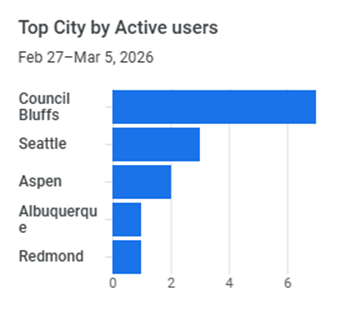
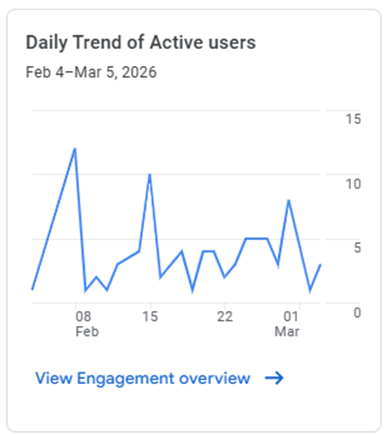
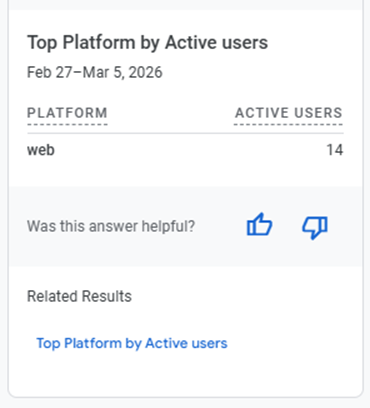
    This week, I explored the Automated Insights feature in Google Analytics 4, which uses machine learning to automatically detect unusual changes and emerging trends in site data. I accessed automated insights through Method I – the Home section of the GA4 reporting dashboard where the Insights panel displayed automatically generated observations about my site’s traffic patterns. One notable insight flagged by GA4 was an unusual spike in active users during the week, which Analytics Intelligence attributed to increased engagement from new blog post publications. I also explored the Search Bar (Method III) by typing keywords like “traffic” and “sessions” to surface additional suggestions from Analytics Intelligence. The automated insights panel provided a clear, visual summary of what changed, why it might have changed, and how it compared to previous periods — without requiring any manual report configuration. This feature is particularly powerful for monitoring site health passively, as it alerts you to significant changes without you having to check every report manually.

    i) What are top cities by users?
    ii) What’s the Daily Trend Of Active Users?
    iii) What platforms are used the most?

    Essay III – Summary of Custom Insights

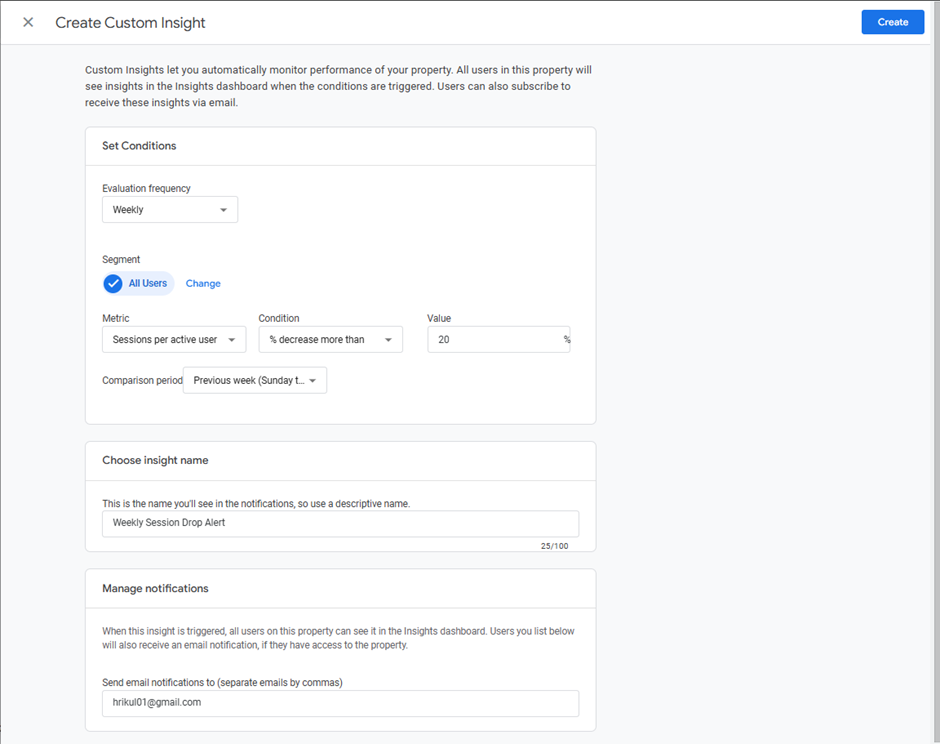
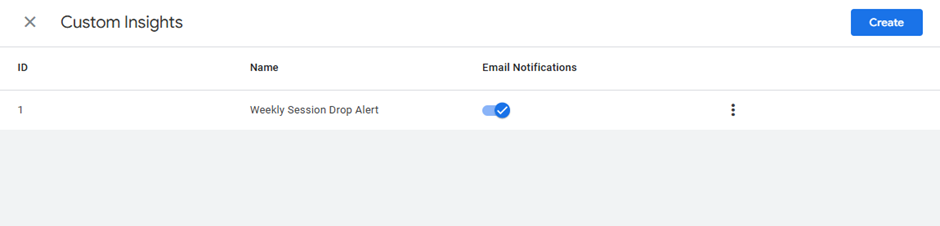
    This week, I created a Custom Insight in Google Analytics 4 to monitor a specific KPI relevant to my site’s goals. I navigated to the Insights section in GA4 and selected Method II – Start from Scratch to define my own custom insight rules. I configured the insight with the following parameters: Evaluation Frequency set to Weekly, Segment set to All Users, and the Condition set to trigger when the number of Sessions decreases by more than 20% compared to the previous week. This custom insight is designed to immediately alert me if site traffic drops significantly, an early warning system that allows me to react quickly by publishing new content or reviewing any technical issues on the site. I also enabled the email alert option so that GA4 automatically sends a notification to my email whenever this condition is met. Once saved, the custom insight appeared in the Insights dashboard and will activate as soon as the defined threshold is crossed. Custom insights proved to be a highly valuable tool for turning raw analytics data into actionable, goal-oriented monitoring.

    Alert me when Sessions decrease by more than 20% compared to the previous week
    Custom Insight Created Successfully
    AI Automation AI Ethics AI for Developers AI Governance AI Innovation AI Reasoning AI Regulation AI Tools AI Trends 2026 Artificial Intelligence A Sequential Walk Chain Of Thought Context Engineering Deep Learning Edge AI EUAI Act Future Of AI Generative AI HW 3 HW 5 HW 6 HW 7 HW 8 HW 9 HW 10 LLM Low Cost AI Machine Learning Multimodal AI No Code o3 Model On Device AI Open AI Open Source Technology Prompt Engineering Responsible AI SLM Small Language Models Software Development Summary Summary Post Tech Trends Vibe Coding Walk Through Web Analytics

  • Small Language Models

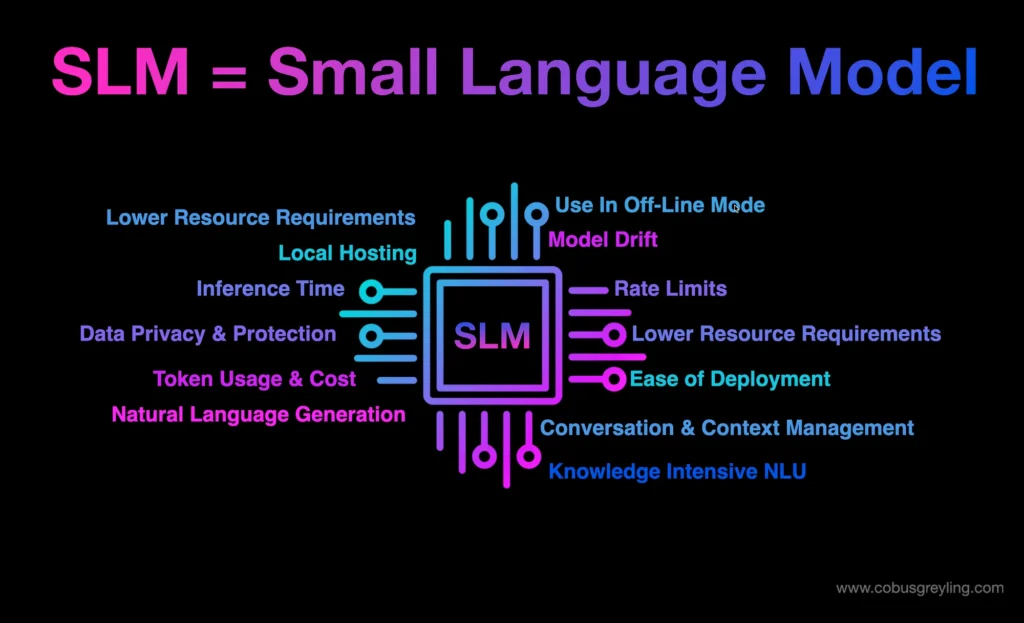
    Small Language Models – Why Smaller AI Is the Smartest Move in 2026

    For years, the AI race had one rule: bigger is better. More parameters, more data, more computing power. The giant wins.

    In 2026, that rule is being rewritten. The most exciting trend in AI right now isn’t a trillion-parameter monster, it’s the rise of Small Language Models (SLMs). Compact, fast, private, and surprisingly powerful.

    So, What Exactly Are Small Language Models?

    Large Language Models (LLMs) like GPT-4 run on over 1 trillion parameters and require massive cloud infrastructure to operate. They’re powerful but expensive, slow for real-time use, and raise serious data privacy concerns since your data leaves your device.

    Small Language Models are AI models with fewer than 10 billion parameters, think of them as the efficient, specialized sibling of the giant LLMs. Models like Microsoft’s Phi-4 Mini (3.8B parameters), Meta’s LLaMA 3.2 (3B), Google’s Gemma, and Mistral 7B can run directly on your laptop, phone, or on-premise server — no cloud required.

    Think of it this way: LLMs are like hiring a world-renowned generalist consultant who charges a fortune and needs a whole office to work. SLMs are like having a highly trained specialist who works right at your desk, instantly, for a fraction of the cost.

    Why Is It Exploding Right Now?

    The shift toward SLMs in 2026 is being driven by very real, practical needs:

    • Microsoft’s Phi-4 Mini (3.8B parameters) matches or beats models in the 7B–9B range on reasoning tasks, at a fraction of the compute cost
    • High-end smartphones are now shipping with built-in 1B–3B parameter models handling photo editing, notification summaries, and voice commands entirely offline
    • Fine-tuned SLMs are handling 75% of customer support tickets with higher accuracy than general LLMs — because they’re trained only on company-specific data
    • Development teams run Llama 3.2 locally for code completion, ensuring proprietary code never leaves the building
    • A healthcare provider uses Phi-3 Mini to process thousands of medical records per hour, fully HIPAA-compliant and on-premise, something impossible with cloud-based LLMs

    Real-World Applications You’ll See Everywhere

    SLMs are quietly powering some of the most practical AI deployments of 2026:

    • Customer Support: Domain-specific SLMs outperform giant LLMs because they’re trained on your exact product and policies
    • On-Device AI: Your phone’s AI features — smart replies, photo descriptions, voice recognition — are increasingly powered by SLMs running locally
    • Healthcare & Legal: Sensitive industries use SLMs on private servers to process confidential data without any cloud exposure
    • Coding Assistants: Developers run SLMs inside their IDE for instant code suggestions without sending proprietary code to external APIs
    • Edge Computing: SLMs power real-time AI in places where internet is unreliable — factories, remote locations, embedded devices

    What This Means for You

    The future of AI isn’t just in the cloud-hosted giants. It’s on your device, in your company’s server, tailored to your specific domain, fast, private, and affordable.

    SLMs prove that in AI, intelligence isn’t just about scale. It’s about the right model, in the right place, for the right task. The smartest AI strategy in 2026 might just be thinking smaller.


    References:
    Ahmad, S. (2026, February 24). Small language models (SLMs): The smart choice for 2026 AI deployments. LinkedIn. https://www.linkedin.com/pulse/small-language-models-slms-smart-choice-2026-ai-suleiman-ahmad-qo3tf
    Machine Learning Mastery. (2026, February 23). Introduction to small language models: The complete guide for 2026. https://machinelearningmastery.com/introduction-to-small-language-models-the-complete-guide-for-2026/

    AI Automation AI Ethics AI for Developers AI Governance AI Innovation AI Reasoning AI Regulation AI Tools AI Trends 2026 Artificial Intelligence A Sequential Walk Chain Of Thought Context Engineering Deep Learning Edge AI EUAI Act Future Of AI Generative AI HW 3 HW 5 HW 6 HW 7 HW 8 HW 9 HW 10 LLM Low Cost AI Machine Learning Multimodal AI No Code o3 Model On Device AI Open AI Open Source Technology Prompt Engineering Responsible AI SLM Small Language Models Software Development Summary Summary Post Tech Trends Vibe Coding Walk Through Web Analytics

  • Vibe Coding

    Vibe Coding – When Anyone Can Build Software Without Writing a Single Line of Code

    Remember when building an app meant months of learning syntax, debugging errors, and hiring expensive developers? Those days are officially over.

    We are living through one of the most radical shifts in software development, the rise of Vibe Coding. And if you think this is just for programmers, think again. Vibe coding is quietly turning every person with an idea into a builder in 2026.

    So, What Exactly Is Vibe Coding?

    Traditional software development required you to write code line by line, syntax by syntax. You needed to know the language, the logic, the frameworks. One missing semicolon could break everything.

    Vibe coding flips this entirely. You simply describe what you want to build in plain English, and AI generates the code for you. Want a personal expense tracker? Describe it. Need a portfolio website? Describe it. The AI tools like Cursor, GitHub Copilot, Replit AI, and Loveable interprets your vision and builds it.

    The term was coined in early 2025 by Andrej Karpathy, co-founder of OpenAI, and it was so impactful that Collins Dictionary named it their Word of the Year. Think of it this way: traditional coding is like learning to drive a manual car, you control every gear. Vibe coding is like telling your GPS where to go and letting it handle the rest.

    Why Is It Exploding Right Now?

    The momentum behind vibe coding in 2026 is staggering. Here’s what’s driving it:

    • 92% of US developers now use AI-assisted coding tools, with AI generating 46% of all code written in 2026 — up from just 10% in 2023
    • IBM reported a 60% reduction in development time for enterprise internal apps using AI-assisted coding
    • Google CEO Sundar Pichai hailed it as a landmark shift, saying it will enable anyone to become a next-generation tech professional
    • Capgemini’s UK CTO declared 2026 the year “AI-native engineering goes mainstream” as vibe coding practices fully mature
    • Tools like Replit AI and Loveable have made it accessible to designers, entrepreneurs, and students — zero prior coding experience required

    Real-World Applications You’ll See Everywhere

    The impact isn’t just in Silicon Valley. Vibe coding is showing up in everyday workflows:

    • Startups: Founders are shipping MVPs in days instead of months, without hiring a dev team
    • Internal Tools: Business teams build custom dashboards, automation scripts, and data pipelines without IT involvement
    • Education: Students build fully functional apps for class projects using nothing but natural language prompts
    • Design: UI/UX designers bring their mockups to life instantly, no handoff to developers needed
    • Healthcare & Finance: Domain experts build specialized tools fine-tuned to their industry without needing a software background

    What This Means for You

    Whether you’re a student, a designer, an entrepreneur, or a professional, vibe coding is removing the single biggest barrier between your ideas and execution: the need to know how to code.

    The question is no longer “Can you code?” In 2026, the real question is: “Can you describe what you want clearly enough for AI to build it?”


    References:
    Hashnode. (2026, February 25). The state of vibe coding in 2026: Adoption won, now what? https://hashnode.com/blog/state-of-vibe-coding-2026
    Marr, B. (2026, February 10). Why vibe coding is about to change work in every industry. Forbes. https://www.forbes.com/sites/bernardmarr/2026/02/10/why-vibe-coding-is-about-to-change-work-in-every-industry/

    AI Automation AI Ethics AI for Developers AI Governance AI Innovation AI Reasoning AI Regulation AI Tools AI Trends 2026 Artificial Intelligence A Sequential Walk Chain Of Thought Context Engineering Deep Learning Edge AI EUAI Act Future Of AI Generative AI HW 3 HW 5 HW 6 HW 7 HW 8 HW 9 HW 10 LLM Low Cost AI Machine Learning Multimodal AI No Code o3 Model On Device AI Open AI Open Source Technology Prompt Engineering Responsible AI SLM Small Language Models Software Development Summary Summary Post Tech Trends Vibe Coding Walk Through Web Analytics